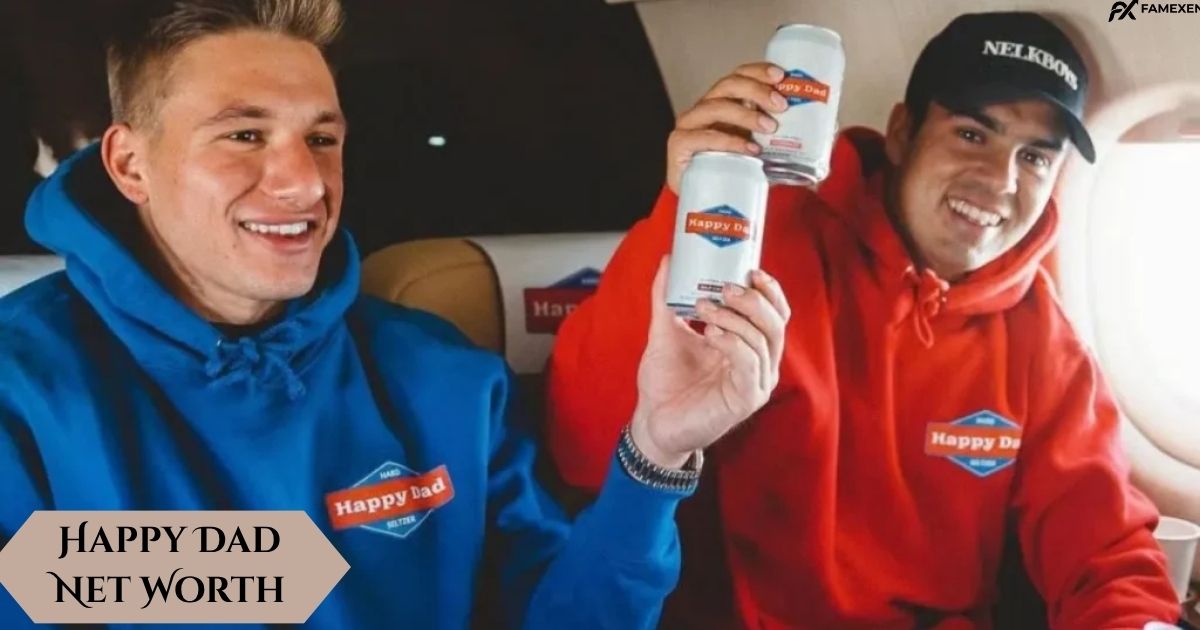
What happens when a viral YouTube crew stops promoting other people’s drinks and starts making their own? You get Happy Dad one of the fastest-growing hard seltzer brands in America, built from the ground up by the NELK Boys and a pair of savvy tech entrepreneurs. In just a few years, this bold, no-frills beverage brand has grown from a passion project into a $250–$300 million empire. Here’s everything you need to know about Happy Dad’s net worth, its owners, revenue, brand value, and what makes it tick.
Quick Bio
| Detail | Info |
|---|---|
| Brand Name | Happy Dad Hard Seltzer |
| Founded | 2021 |
| Headquarters | Orange County, California |
| Founders | Kyle Forgeard, Steve Deleonardis, John Shahidi, Sam Shahidi |
| CEO | Sam Shahidi |
| President | John Shahidi |
| Estimated Net Worth (2025) | $250 million – $300 million |
| Annual Revenue (Est.) | $80 million – $100 million |
| ABV | 5% |
| Calories per can | ~100 |
Who Owns Happy Dad?
Happy Dad is owned by a four-person founding partnership: Kyle Forgeard and Steve Deleonardis of the NELK Boys, along with brothers John Shahidi and Sam Shahidi. The brand operates under Happy Dad LLC, a privately held company. Kyle Forgeard and Steve Deleonardis each hold an estimated 40–45% ownership stake, making them the majority owners.
John Shahidi, who serves as President, and Sam Shahidi, who serves as CEO, share the remaining 15–20%. In 2023, the ownership group expanded to include Blue Equity, a private equity firm that took a minority stake to accelerate distribution across the United States. Investment firms Anti Fund and Lakeside Capital also hold small minority positions, though the founders retain clear majority control.
How Happy Dad Became So Popular
Happy Dad didn’t follow the traditional beverage playbook. There were no celebrity endorsements, no Super Bowl commercials, and no corporate PR campaigns. Instead, the founders leaned entirely into their existing fanbase. The NELK Boys had already built a community of millions through their “Full Send” lifestyle raw, unfiltered content that resonated with young men who valued authenticity over polish.
When they decided to launch a hard seltzer, their fans didn’t just buy it they championed it. That organic word-of-mouth, amplified by social media, created a marketing engine most brands can only dream of.
Happy Dad also solved a real consumer problem. Many hard seltzer drinkers complained about harsh aftertastes and excessive carbonation. Happy Dad went back to basics: lower carbonation, fermented cane sugar as the alcohol base, real fruit flavors, and clean ingredients. The result was a drink people genuinely wanted to keep buying.
Also read: Exploring Rudy Ruettiger Net Worth: The Journey of an Inspirational Icon
Happy Dad’s Rise to Success
Initial Struggles and Successes
Like any startup, Happy Dad didn’t have a perfect launch. The brand initially faced distribution challenges, a limited retail footprint, and a crowded market dominated by heavyweights like White Claw and Truly. But they had something those brands lacked: a tribe.
Every NELK Boys video, every Full Send merch drop, and every social media post was essentially free advertising. The founders documented the entire product development process on YouTube brewery visits, taste tests, even failed recipes giving fans a genuine sense of ownership in the journey. By the time Happy Dad hit shelves in 2021, there was already real pent-up demand waiting for it.
Early regional launches in California sold out quickly. Within two years, the brand was available across dozens of states, and by 2023 it had become the most-followed hard seltzer brand on Instagram, surpassing one million followers. That kind of organic growth is almost unheard of in the competitive beverage industry.
Happy Dad Net Worth (2025)
As of 2025, industry analysts estimate Happy Dad’s net worth at between $250 million and $300 million. This valuation is built on several pillars: nationwide retail and convenience store product sales, brand equity and cultural influence, merchandise revenue from clothing and accessories, contract partnerships and promotional deals, and distribution expansion across 30-plus U.S. states and parts of Canada.
For context, beverage companies typically trade at revenue multiples of 2.5x to 4x depending on growth trajectory. With estimated annual revenue of $80–$100 million and consistent double-digit growth, Happy Dad’s valuation sits well within normal industry benchmarks. Very few alcohol brands reach this kind of value in under five years without traditional advertising.
Inside the Business Model
Happy Dad operates a lean, community-first business model that sets it apart from legacy beverage brands. Hard seltzer sales form the core of the business, with product sold in 12 oz and 16 oz cans across grocery chains, liquor stores, and convenience stores nationwide.
Beyond the cans, the brand generates meaningful income through merchandise branded apparel, hats, and accessories sold through the Full Send ecosystem. Brand collaborations with events, sports organizations, and media platforms add another layer, while limited-edition seasonal releases create urgency and social buzz that drive spikes in both sales and online conversation.
One of the brand’s most significant business milestones was becoming the exclusive hard seltzer partner of The Joe Rogan Experience in late 2025 a deal that dramatically expanded its reach beyond the NELK fanbase and into a much broader audience of millions. The brand’s gluten-free, 5% ABV, 100-calorie profile also appeals to health-conscious consumers, widening its addressable market in a meaningful way.
Happy Dad’s Marketing and Brand Lifestyle
Social Media Strategy
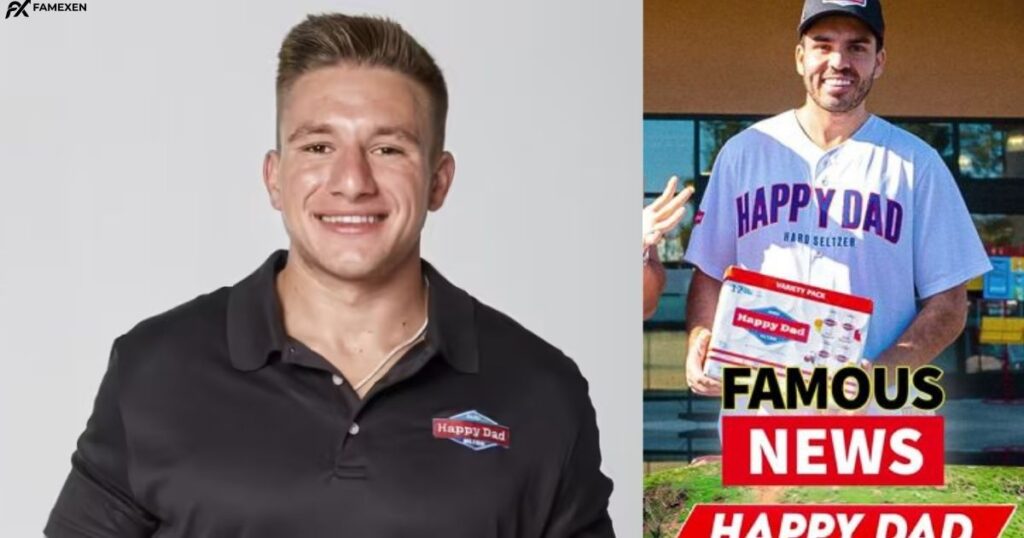
Happy Dad’s marketing is inseparable from the NELK Boys’ social presence. Rather than spending on traditional paid advertising campaigns, the brand built its entire marketing strategy around content that its audience was already consuming. On YouTube, long-form videos regularly pull millions of views.
On Instagram, product drops and lifestyle content are amplified through fan reposts. On TikTok, behind-the-scenes clips and viral challenges keep the brand constantly in conversation. The Full Send Podcast and high-profile sponsorships like the Joe Rogan deal extend Happy Dad’s voice into the audio space as well. The brand speaks directly to its audience in the same voice its audience already loves no corporate filter, no sanitized messaging.
Viral Campaigns
Several Happy Dad campaigns took on a life of their own online. Limited-edition flavor drops routinely sell out within hours, creating a scarcity effect that drives organic conversation without a dollar spent on paid media. UFC partnership activations brought the brand into the sports world and introduced it to a massive new audience.
Collaborative limited releases generated enormous hype cycles on social media, with fans sharing purchase confirmations and unboxing moments as if they were cultural events. The strategy is straightforward: make something people want to talk about, and let the community do the heavy lifting.
Revenue and Brand Value
Happy Dad’s financial trajectory has been one of the steepest in the beverage industry. The brand launched in 2021 at an early-stage valuation, reached approximately $200 million by 2022 through rapid regional expansion, and climbed to $200–$250 million in 2023 as it secured national retail presence and crossed one million Instagram followers.
By 2024 it had hit the $250 million mark and landed in the top-25 nationally across hard seltzer rankings. In 2025, backed by the Joe Rogan partnership and 30-plus state distribution, analysts placed the valuation at $250–$300 million.
As of 2026, it is approaching $300 million and beyond, with near-nationwide distribution underway. Annual revenue is estimated at $80–$100 million by most industry analysts, though some sources cite figures exceeding $150 million based on broader sales channel estimates.
Comparisons to Competitors
| Brand | Est. Valuation | Annual Revenue | ABV | Calories | Key Differentiator |
|---|---|---|---|---|---|
| Happy Dad | $250–$300M | $80–$100M+ | 5% | ~100 | Influencer-built, community-driven |
| White Claw | $5B+ | $2B+ | 5% | ~100 | Category pioneer, dominant share |
| Truly | ~$1B+ | $500M+ | 5% | ~100 | Flavor variety, Boston Beer backing |
| Topo Chico | Coca-Cola portfolio | N/A | 4.7% | ~100 | Mineral water brand heritage |
| Vizzy | Molson Coors subsidiary | N/A | 5% | ~100 | Vitamin C positioning |
Key Insights from the Comparison
White Claw remains the undisputed category leader, but Happy Dad has been closing ground fast. As of early 2026, Happy Dad holds the number three spot in hard seltzer across Western U.S. convenience stores, having surpassed both Topo Chico and Vizzy. Nationally in U.S.
convenience stores, it ranked fourth as of late 2025. What makes these rankings especially impressive is the context: while White Claw grew 4.5% and Truly declined 8.6% over the same measurement period, Happy Dad posted 11.48% year-over-year growth one of the highest rates in the entire category. Volume jumped 44% to 3.5 million cases in 2024 alone, making it one of the best-performing flavored malt beverage brands in the country that year.
Where Is Happy Dad Sold?
Happy Dad is available across the United States and parts of Canada through a wide and growing network of retail partners. Major grocery chains including Walmart, Kroger, and Albertsons carry the brand, as does Costco on the warehouse side.
Liquor retailers like Total Wine & More and BevMo stock it prominently, while convenience store chains such as 7-Eleven, Circle K, and Casey’s have been particularly strong distribution channels. Online availability exists in limited quantities depending on each state’s alcohol shipping laws. As of early 2026, the brand has expanded from its California origins to coverage in over 30 states, with a full 50-state rollout currently underway.
Happy Dad’s Founders and Vision
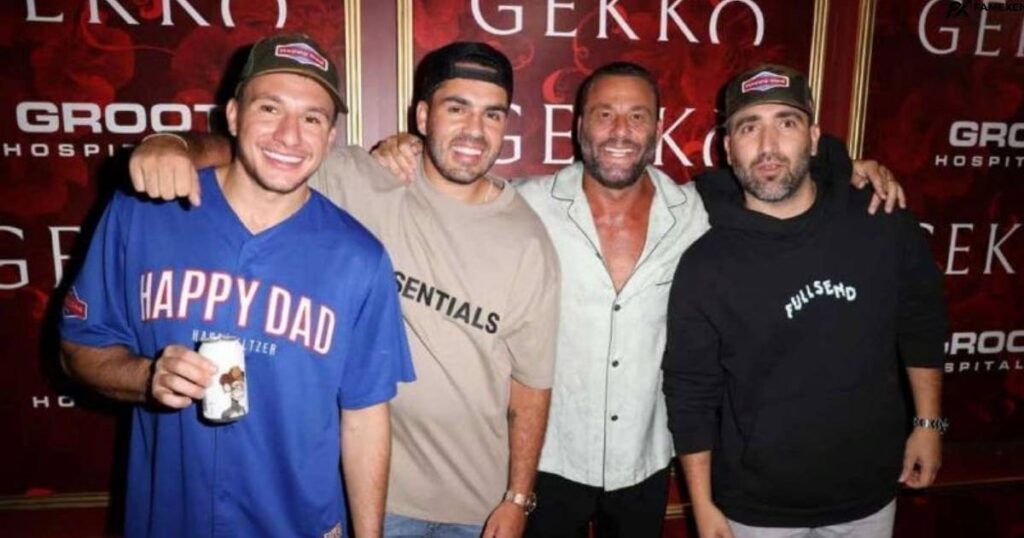
The founding team blends creator economy power with serious business experience. Kyle Forgeard co-founded the NELK Boys and built a YouTube channel with tens of millions of subscribers. His personal net worth is estimated at around $25 million, much of it tied directly to Happy Dad’s rise. Steve Deleonardis, known online as SteveWillDoIt, is a co-founder whose “full send” ethos became the cultural backbone of the brand, with a personal net worth similarly estimated around $25 million.
Sam Shahidi serves as CEO, bringing deep experience from his earlier work co-founding the Shots Podcast Network he handles the day-to-day operational machinery that keeps the company scaling. John Shahidi, as President, focuses on strategic partnerships and brand alliances, and was the architect behind the landmark Joe Rogan Experience deal. Their shared vision from the start was simple: create the best-tasting hard seltzer on the market and market it to a community that was already listening.
What Does Happy Dad Taste Like?
Happy Dad is widely praised for its smooth, clean finish and notably lower carbonation compared to competitors. Drinkers who find standard hard seltzers too fizzy or metallic often name Happy Dad as their preferred alternative.
The use of fermented cane sugar as the alcohol base gives it a cleaner flavor profile than malt-based seltzers. There is no harsh aftertaste which was one of the founders’ original goals when developing the recipe. Overall, the taste comes across as light, refreshing, and genuinely easy to drink across multiple sessions.
What Alcohol Is in Happy Dad?
Happy Dad Hard Seltzer uses fermented cane sugar as its alcohol source, resulting in a clean, neutral base that does not interfere with the fruit flavors. Each can contains 5% ABV (alcohol by volume), putting it on par with most standard beers and leading hard seltzers like White Claw and Truly. The fermented cane sugar approach is part of why the drink tastes lighter and cleaner than many malt-based alternatives it simply produces fewer flavor compounds that might create aftertaste or bitterness.
Tea, Flavors, and Fruit Punch
Happy Dad’s core lineup has expanded significantly since its original four flavors. The hard seltzer range currently includes Wild Cherry, Lemon Lime, Watermelon, Pineapple, and Grape as flagship options, with Banana having been released as a limited edition that sold out rapidly. Beyond the seltzer line, the brand expanded into the hard tea segment, offering tea-based beverages with the same 5% ABV and clean flavor philosophy.
Limited-edition and collaboration flavors including fruit punch varieties have been released seasonally and tend to sell out quickly, driven by the brand’s loyal fanbase and the social media hype cycles they create around every new drop.
Happy Dad’s Growth and Future Plans
Happy Dad has shown consistent upward momentum with no signs of slowing. The brand is actively working to complete its rollout to all 50 U.S. states, and early-stage conversations around international expansion particularly in Canada and potential European markets point to a larger global ambition.
New product lines including hard tea and fruit punch have already broadened the brand beyond its original seltzer identity. High-profile media partnerships, building on the foundation set by the Joe Rogan deal, are expected to continue multiplying the brand’s reach.
Within existing retail partners, the focus is on deepening shelf presence by expanding SKU count and securing more prominent placement. The brand is also likely to explore additional private equity partnerships or a potential acquisition by a larger beverage conglomerate as its valuation continues to climb.
Happy Dad’s Net Worth in Perspective
To understand just how remarkable Happy Dad’s growth is, consider that most legacy beverage brands take decades to reach a $250 million valuation. Happy Dad did it in under five years, without a single Super Bowl ad.
That is the power of community-first marketing in the creator economy era. The brand succeeded by treating fans as partners rather than consumers and those fans responded by making Happy Dad one of the most culturally relevant drinks in America. The founders didn’t build a brand and then find an audience; they built an audience first and then gave it a brand worth rallying around.
Happy Dad Net Worth 2026
As of 2026, Happy Dad’s estimated net worth is approaching $300 million, supported by expanded distribution across all 50 U.S. states, the Joe Rogan podcast partnership, and continued double-digit revenue growth.
While exact figures remain private since Happy Dad is not publicly traded, industry analysts and beverage sector benchmarks consistently place the valuation in the $250–$300 million range. With strong upward momentum and no sign of the brand’s cultural relevance fading, the trajectory into the second half of the decade looks very promising for the founders and their investors alike.
Who Is the CEO of Happy Dad?
Sam Shahidi is the CEO of Happy Dad Hard Seltzer. He co-founded the brand alongside his brother John Shahidi and the NELK Boys. Sam brings a background in digital media and business strategy, having previously co-founded the Shots Podcast Network.
His operational leadership has been central to scaling Happy Dad’s distribution network and retail presence across the country, turning what began as a California-based product into a nationally recognized brand.
Does Steve Make Money from Happy Dad?
Yes, absolutely. Steve Deleonardis, known publicly as SteveWillDoIt, is a co-owner and founding partner of Happy Dad, holding an estimated 40–45% ownership stake in the company. As the brand generates $80–$100 million or more in annual revenue, Steve earns from his equity share, making Happy Dad one of his most significant income sources alongside his social media content and individual brand deals. His role goes beyond a passive investment his personality and online presence are core to what makes Happy Dad resonate with its audience.
Is Happy Dad a Successful Company?
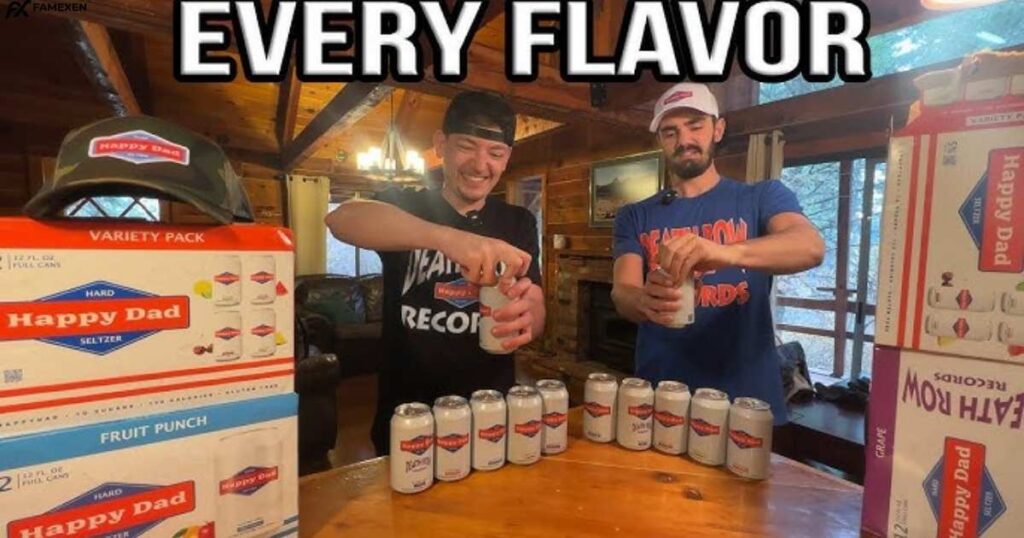
By any measure, yes. Happy Dad is one of the most successful influencer-born beverage brands in history. It ranks in the top four or five hard seltzer brands nationally, achieved a valuation of $250–$300 million in under five years, and continues to post double-digit growth at a time when most hard seltzer brands are seeing declines.
Brand awareness, social media following, retail penetration, and revenue growth all point in the same direction. Happy Dad is not a niche novelty it is a genuine category contender that has earned its place alongside brands that have been around for decades.
Did NELK Sell Happy Dad?
No. As of 2026, the NELK Boys primarily Kyle Forgeard retain their majority ownership stake in Happy Dad. While Blue Equity and some smaller investment firms hold minority positions, the NELK Boys have not sold their shares or exited the business.
The brand remains founder-led and privately held, which is a significant part of why it has maintained such an authentic identity. A sale or IPO remains a possibility down the road, but nothing of that nature has been publicly announced or confirmed.
Is Happy Dad a Healthy Drink?
Happy Dad is marketed as a cleaner alternative within the hard seltzer category. Each can comes in at around 100 calories, contains approximately 1 gram of sugar, uses fermented cane sugar as its alcohol source rather than artificial additives, and is certified gluten-free with no artificial flavors.
Compared to regular beer, it is lower in calories and significantly lower in carbohydrates. That said, like any alcoholic beverage, it should be consumed in moderation. It is not a health drink in the traditional sense, but within the alcoholic beverage category, its nutritional profile is genuinely lean and compares well against most alternatives.
What Is Happy Dad Ranked in Sales?
Happy Dad is ranked number three in hard seltzer across Western U.S. convenience stores as of early 2026, and ranked number four nationally in U.S. convenience store hard seltzer sales as of late 2025. Across all beverage channels, it sits in the top 25 nationally.
Volume grew 44% to 3.5 million cases in 2024, which was among the highest growth rates in the entire flavored malt beverage category that year. In a market where most brands were declining, those numbers stand out sharply.
Is Happy Dad Healthier Than Beer?
In most nutritional comparisons, Happy Dad comes out ahead of standard beer. A typical can of Happy Dad contains around 100 calories and approximately 2 grams of carbohydrates, while an average regular beer runs closer to 150 calories and 12 grams of carbs.
Happy Dad is also gluten-free, which standard beer typically is not. Both carry 5% ABV, so the alcohol content is comparable. For anyone watching calorie or carbohydrate intake, Happy Dad is clearly the lighter option though it is worth remembering that both are alcoholic beverages and should be enjoyed responsibly.
Happy Dad Ownership Percentage
Based on available industry reports and sourced estimates, Kyle Forgeard holds approximately 40–45% of Happy Dad, and Steve Deleonardis holds a similar 40–45% stake. Brothers John Shahidi and Sam Shahidi together account for the remaining 15–20%, with Blue Equity and a small number of other investment firms holding minor positions.
It is worth noting that Happy Dad has not publicly disclosed exact ownership percentages, as it operates as a private company. All figures referenced here are based on industry reporting and analyst estimates rather than official company disclosures.
Conclusion
Happy Dad’s story is more than a beverage success it is a masterclass in modern brand building. By leveraging the NELK Boys’ authentic connection with millions of loyal fans, combining it with serious business leadership from the Shahidi brothers, and creating a product that genuinely solved a consumer pain point, the founders built a $250–$300 million brand without following a single rule from the traditional marketing playbook.
They proved that in today’s creator economy, the right community and the right product can outperform any advertising budget. As distribution expands, new products launch, and high-profile partnerships continue to multiply the brand’s reach, Happy Dad’s net worth and cultural influence are only set to grow.
Frequently Asked Questions
Who founded Happy Dad?
Happy Dad was founded in 2021 by Kyle Forgeard and Steve Deleonardis of the NELK Boys, along with brothers John Shahidi and Sam Shahidi, after the group decided they wanted to create a better-tasting hard seltzer for their fanbase.
What is Happy Dad’s net worth in 2025?
Industry analysts estimate Happy Dad’s net worth at between $250 million and $300 million as of 2025, based on revenue multiples, brand equity, merchandise income, and distribution growth.
How much revenue does Happy Dad generate?
Happy Dad’s estimated annual revenue sits between $80 million and $100 million according to most industry analysts, though some broader estimates across all sales channels push that figure above $150 million.
What flavors does Happy Dad come in?
Core flavors include Wild Cherry, Lemon Lime, Watermelon, Pineapple, and Grape, with limited-edition releases like Banana and seasonal fruit punch varieties also available periodically.
Is Happy Dad available nationwide?
Happy Dad is currently available in over 30 U.S. states and is actively expanding toward all 50, with limited availability in Canada as well.
What makes Happy Dad different from White Claw?
Happy Dad sets itself apart through lower carbonation, a fermented cane sugar alcohol base, no artificial flavors, and an influencer-driven brand identity rooted in the NELK Boys’ Full Send culture — something White Claw simply cannot replicate.
Does Happy Dad contain gluten?
No. All Happy Dad products are certified gluten-free.
What rank is Happy Dad among hard seltzers?
As of early 2026, Happy Dad ranks number three in hard seltzer across Western U.S. convenience stores and number four nationally, trailing only White Claw and Truly.

Milly Ava is a passionate digital creator and the visionary behind a thriving celebrity-focused platform, dedicated to delivering engaging and reliable content. With a strong eye for trending stories and public interest, she curates insightful articles that keep readers informed and entertained.